
In Loving Memory of Stephen G. Bell
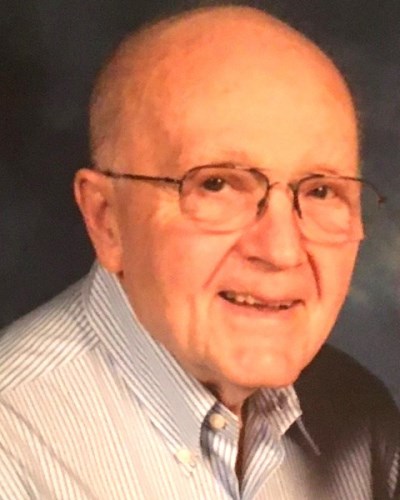
360 Youth Services would like to honor the legacy of Stephen Bell, founder and first president of 360 Youth Services (formerly known as Naperville Community Outreach). We remember him for his dedicated service to the youth of our community. He was a shining example of how much one man can impact a community and inspire us all! We are grateful for the legacy he left at our organization and throughout the Naperville community. Our thoughts are with his family. Click here for his obituary.
360 Youth Services Announces Scot Thurman as New Executive Director
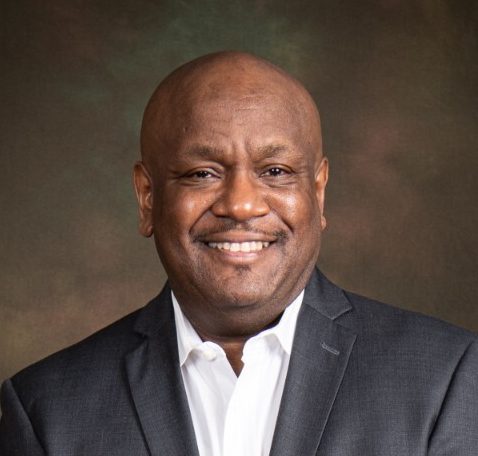
Naperville, IL — Youth-centered, community-based nonprofit 360 Youth Services has selected Scot Thurman, J.D., M.A. as its next executive director. 360 provides life-changing services to youth through substance-use prevention education, counseling and housing in the Naperville, Aurora and surrounding communities. Thurman is a long-time member of the Naperville/Aurora community and brings a wealth of education and experience to his new role. Prior to joining 360, he spent nine years as the director of youth and community services for the Aurora Township and before that, seven years as the youth director at Wayside Cross Mission in Aurora. He has also been active in community leadership roles, such as with the Rotary Club of Aurora, while teaching law and leadership (among other topics) at local universities and colleges. “Scot is a positive and energetic leader. His passion for serving youth, collaborative leadership style and community organizing experience will be great assets to 360 moving forward,” said 360 Board Member and Lutheran Child and Family Services of Illinois President and CEO Mike Bertrand. “I’m excited to work with Scot and confident that 360 will be well-positioned under his guidance to thrive in the years to come.” A native New Yorker, Thurman completed his Bachelor’s and Juris Doctor Degree at SUNY Stony Brook and the University at Buffalo Law School. He began his professional career in Washington D.C., working in areas of government contracts, grants, procurement, and various areas of corporate law. After spending five years in our nation’s capital, Scot relocated to Chicago where he spent over ten years working for Fortune 500 companies in the areas of corporate, regulatory, and transactional law. Thurman pursued his first career change after obtaining a Master’s Degree from Moody Theological Seminary and worked in various areas of community outreach and ministry with a focus on youth. Currently, he is also working on a Ph.D. in Community Psychology at National Louis University in Chicago. “I’m excited to dig in and see how I can help this amazing organization, which has been impacting lives for the past 50 years, continue to grow and serve more youth within our communities,” Thurman said. “My passion for our community’s future fuels my desire to learn, advocate for, and empower our youth. They are our future!” As executive director, Thurman will work closely with staff, as well as other organizations and leaders within the community to ensure 360 will continue to play a critical role in providing youth-centered programs.
360 Youth Services and Lutheran Child and Family Services of Illinois reach an agreement to be stronger together

https://youtu.be/AJRTdhNpLCs Naperville, IL — Today, the leadership team of Lutheran Child and Family Services of Illinois (LCFS) announced they have finalized an agreement to bring 360 Youth Services under the organizational umbrella of LCFS. 360 Youth Services will continue to operate as a separate social service non-profit, retaining its name, mission, values, and services, but with LCFS providing administrative support and governance. Both organizations are committed to working together to strengthen and grow the youth and family-centered prevention, counseling, and housing programs provided by 360 to Naperville, Aurora and surrounding communities. “Our organizations saw each other as a good fit because our missions, values, and commitments around being welcoming to marginalized youth are in such strong alignment,” said LCFS President & CEO Mike Bertrand of the agreement. “Having raised my family in Aurora, I’m aware of the incredible impact 360 has had in this community over the last 50 years, and I want this to continue. What made 360 attractive to LCFS is their preventative services because I believe we need to offer support to more children and families before they reach a crisis point.” Together the two organizations already serve more than 5,600 young people and their families throughout Illinois, and hope to grow that impact. LCFS has a very strong commitment to serving older youth and currently they are one of the largest providers of services to adolescents in Illinois’ child welfare system. 360 is the only youth-specific service provider for young people experiencing homelessness outside of Chicago in the state of Illinois. “Our programs and impact are strong, but as a small non-profit we’ve faced administrative challenges,” voiced 360 Interim Executive Director Dawn Melchiorre. “LCFS’ organizational support will allow us to focus on serving more young people and their families in order to fulfill our vision of a community where all youth possess the necessary skills to successfully navigate life’s challenges.”
A 360 Lens on Prevention: How One Agency is Addressing Racial Bias
By: JAKE LEVINSON (he/they) PREVENTION FIRST Download the Original Article 360 Youth Services After witnessing a sequence of racially motivated tragedies and the cost of systemic racial bias, 360 Youth Services decided to conduct an internal audit. They identified a gap in the delivery of their services which motivated the development of a comprehensive guide for delivering prevention services focusing on equity, “Overcoming Racial Bias in Prevention.” “We recognize that racism is an issue. It’s not easy to talk about. It is part of our work. It’s important for us to recognize our biases so that we can better serve who we’re serving.” Terra Rumer, Power of Choice Campaign 6th-8th Grade Coordinator,360 Youth Services During the summer of 2020, motivated by the fates of George Floyd, Breonna Taylor and others, the substance use prevention team at 360 Youth Services took pause and reflected on the needs. They recognized that they could better serve their community and youth by confronting racism and examining best practices for establishing racial equity policies. Acknowledging that biases could affect the way they delivered services, they determined that they needed to know how to overcome this to serve diverse communities and youth better. Steps to a Solution The substance use prevention team at 360 began a year-long process of developing what ultimately became the guidelines. In June 2020, after researching whether similar tools existed and not finding any that fit theirspecific needs, 360 began internal meetings with staff across the agency to address inclusion, diversity, and racial equity. Their agency started this process with the whole community in mind, acknowledging that addressing racial equity would cut across all sectors, especially youth of color and LGBTQ+ youth. To establish a productive working group, they devoted a significant amount of time building trust in the process. They cultivated an effective working group that welcomed honest and constructive ideas and feedback. Through a combination of team meetings, one-on-one meetings, and individual and group feedback from the whole group, the team developed the guidelines within a year. Results 360 has applied the guidelines for racial equity in numerous areas. Youth Advisory Committee members used the guidelines to revise materials through a racial equity lens and intentionally engaged a more diverse committee membership, examining race, gender expression, gender identity, orientation, ability, and socio-economic experience. The communication campaign (Power of Choice) committee collaborated with diverse parent groups to obtain feedback and help disseminate materials to ensure a broader reach. Materialsdeveloped locally began to reflect more representative imagery. The team shared information from the process with their local coalition to include in the health disparities section of their Drug-Free Communities Grant application. For their Operation Snowball youth leadership program, they have observed an increase in youth leadership by youth of color. The Prevention team has expressed that with this ongoing process, they feel they are more likely to communicate messages that resonate with historically underserved populations, reinforcing and buildingprotective factors that fit lived experiences of their marginalized youth and families. Sustaining Success While the guidelines have been created, the work is not complete. The team continues to meet on this topic, and the agency has established a culture team that includes someone from each department of the agency and meets regularly. Staff view the guidelines as a living, breathing document that is returned to on atleast a quarterly basis. Moving forward, the 360 staff encourages others working in prevention to utilize the guidelines or similar guidelines in their own work, and share any additional ideas, lessons learned, and experiences. Their team acknowledges that others who engage in these efforts can expect uncomfortable conversations, but theyalso stress that beginning the dialogue and the work is vital. 360 welcomes other agencies to borrow from their work by adapting as much of the guidelines as appropriate. “Underage substance use intersects with mental health, so it makes sense that youth substance use intersects with social injustice and racial inequities.” Janyce Hamilton, Power of Choice Campaign HighSchool Coordinator, 360 Youth Services
Empowering Positive Impact with Operation Snowball
I am fortunate that Operation Snowball has been a part of my life for a very long time. I benefited from the program as a teen, returned as an adult volunteer staff member, and two and half years ago I became the Snowball Manager. The best part of Snowball to me is the opportunity to bare witness to the growth of those who choose to be a part of this community. Recently, I was able to connect with our most recent Teen Directors, Olivia Zabel and Jenna Smiley, and ask them about their Snowball experience. Jenna and Olivia planned the event and led their staff to create our first in-person Snowball retreat since 2019. The event hit max capacity for the space and was overall an incredible experience. The theme of the event was Who I am, and the participants were encouraged to reflect on their experiences and explore their own personalities. What have you learned through Operation Snowball? Olivia shared that through Operation Snowball, she how to be herself, take off the metaphorical mask that she wears and ask for help when I need it. These things are something she felt like she always struggled with especially when in middle school and when she first started high school, but through Operation Snowball she was taught how to be her true self. She said, “People should respect me for Who I Am.” Olivia also learned that asking for help is ok and it doesn’t make you weak, but it makes you stronger. Olivia Zabel and Jenna Smiley leading a large group session focused on reflection Jenna was able to learn that it is ok to take a healthy risk and be able to be your true self. She also learned that you are not alone with hard times. It is ok to be vulnerable and talk to other people about hardships that you have gone through. Even if people you talk to aren’t going through the same thing, the environment teaches people to lend a helping hand. How does Operation Snowball impact social emotional health? Olivia and Jenna believe that Operation Snowball impacts social-emotional health because it gives you a great support system and it provides you with so many resources that are available for you to use. Operation Snowball gives people the opportunity to talk about things that people go through so that they feel empowered. Jenna shared that she was able to make new friends who were able to support me during the good and the bad. Being in a judgment-free environment without social pressures meant she could remove the mask and be herself in a healthy, safe environment. What was the most meaningful part of the weekend? Jenna enjoyed seeing people reach out and be vulnerable. It is amazing how others can show their heart and be able to support someone. This program has given Jenna hope to get out of hard times. As a staffer and teen director seeing people being vulnerable and getting comfort out of activities you planned is beautiful. People have said that snowball was the place to express themselves. For Olivia helping to grow the Snowball community for our in-person Snowball in two years was particularly special. Though it was not easy at times, she felt it was the most rewarding and most worthwhile thing she has ever done. She said that “since my Freshman year at my first Snowball “Unstoppable” I remember telling my best friend that when I was old enough, I wanted to be on staff, lead a small group, make a small group area, and be a Teen Director, but I remember not being super hopeful about accomplishing it all. Looking back, I wish that I had more faith in myself because it all came true and I couldn’t be more proud of the weekend that we made.” Something else that was super meaningful to Olivia was that the small group that she helped lead, was full of all first-time Snowball participants and at the end of the weekend, they all said that they were all for sure coming back in the spring. This was amazing to hear because even though they have never been to a Snowball event before, they all loved the weekend and want to do it again in the spring and even go on to future years! Why should someone join us in the future? Olivia thinks that someone should join us in the future because Operation Snowball is one of the most caring, accepting, and loving communities there is. Through this program, She has learned so many amazing life lessons and skills that she can use now and in the future. Nowadays, she feels like connections have been lost through the whole pandemic itself, but with Snowball, you connect with so many people from different backgrounds, different schools that you otherwise wouldn’t have known before, but now you talk to them every day. “All in all, Operation Snowball is one of the best communities that you can be a part of and you can join us for a Spring event April 23rd and 24th! Take the healthy risk to sign up, you won’t regret it!” Olivia Zabel Jenna says people should join us in the future because it allows people to be themselves and get away from the stressors of everyday life. People can connect with others with different perspectives from different schools. They can learn how to help others and how to be themselves. Operation snowball is a great community that is amazing to be a part of. Come join us in an experience you will never forget! What did you and your peer get out of the Staff experience? Olivia made new connections with people throughout Snowball Staff and got more of an understanding of how to facilitate and lead groups. Jenna gained a second family that is always loving her for who she is and was able to gain the knowledge on how to help others in a warm